
It runs the physical business, too.
One asset, end to end (telemetry, hire, availability, invoicing, reconciliation) on the same governed foundation. The proof that governed work isn’t only about AI or documents.
Hours in a notebook. Hire in a spreadsheet. Disputes at month-end.
Machine hours are keyed in from a diary days later. The hire spreadsheet has been edited by four people and agrees with nobody. When the invoice goes out, the client’s records say something different, and reconciliation becomes an argument about whose version to trust.
An append-only record, with automation watching.
Telemetry is recorded automatically. The hire ledger only ever grows: nothing above the line is rewritten; corrections are new entries that say so. When one off-hire event lands, automation updates availability and raises the pro-rata invoice. No AI required. Just rules, kept.
One operational view, not six systems that disagree.
Vehicles and plant, wet and dry hire, telemetry, inspections, maintenance, compliance and the workflows that run between them. The work that currently sits in separate systems, spreadsheets, inbox approvals and individual people’s heads runs in one place, on one record.
Every asset, its history and its current state, in one register.
On-hire, off-hire, rates, availability and cross-hire, on one ledger.
Hours, location and utilisation, recorded automatically from the providers you already use.
Pre-start and periodic checks completed in the field, kept as evidence.
Servicing scheduled against real recorded hours, not a guess.
Certificates, licences and obligations, current and evidenced.
Decisions captured where the work happens, instead of buried in an inbox.
Client statements and internal reporting drawn from the record.
Four surfaces, one record underneath.
The fleet against the month, the record for any one machine, and where that machine actually went. Different views of the same governed data, not separate systems stitched together.
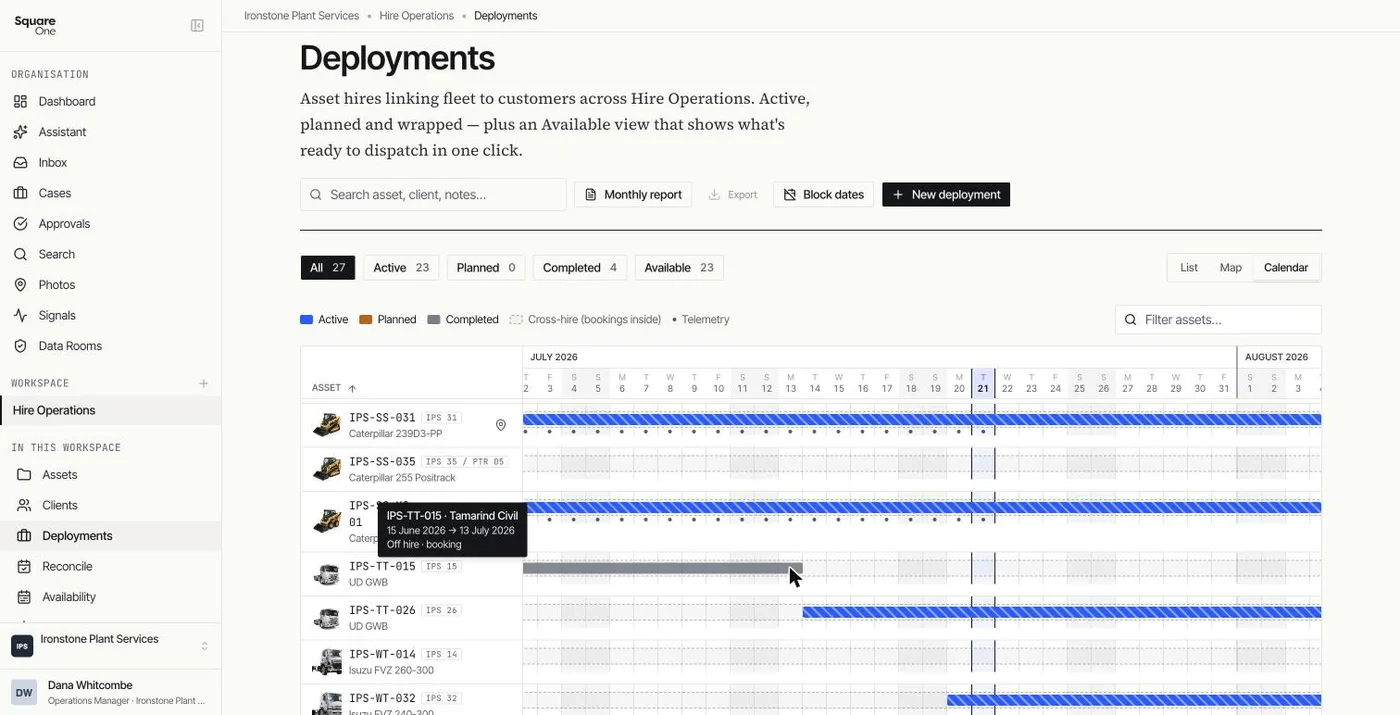
Every hire across the fleet against the month: active, planned and completed, with telemetry underneath.
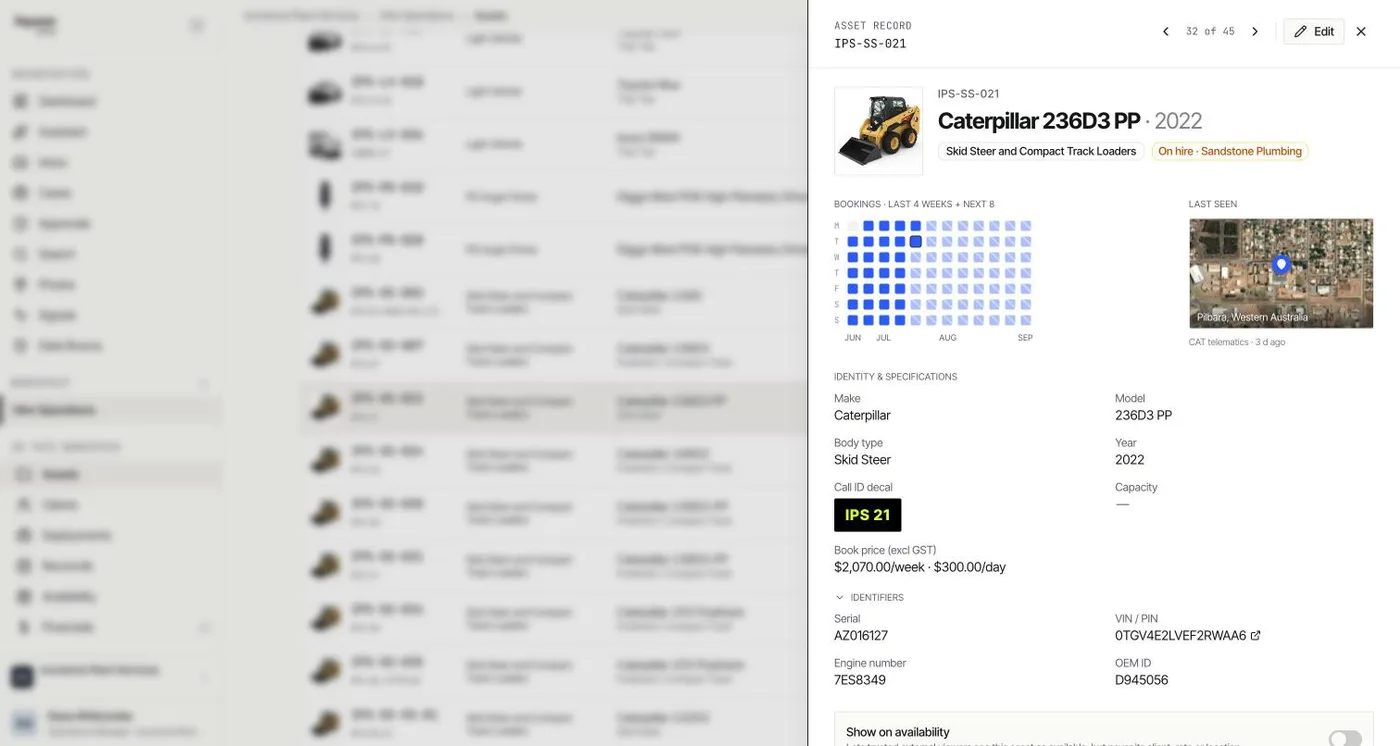
One machine, end to end: bookings, last known position from the telematics provider, identity and book price.
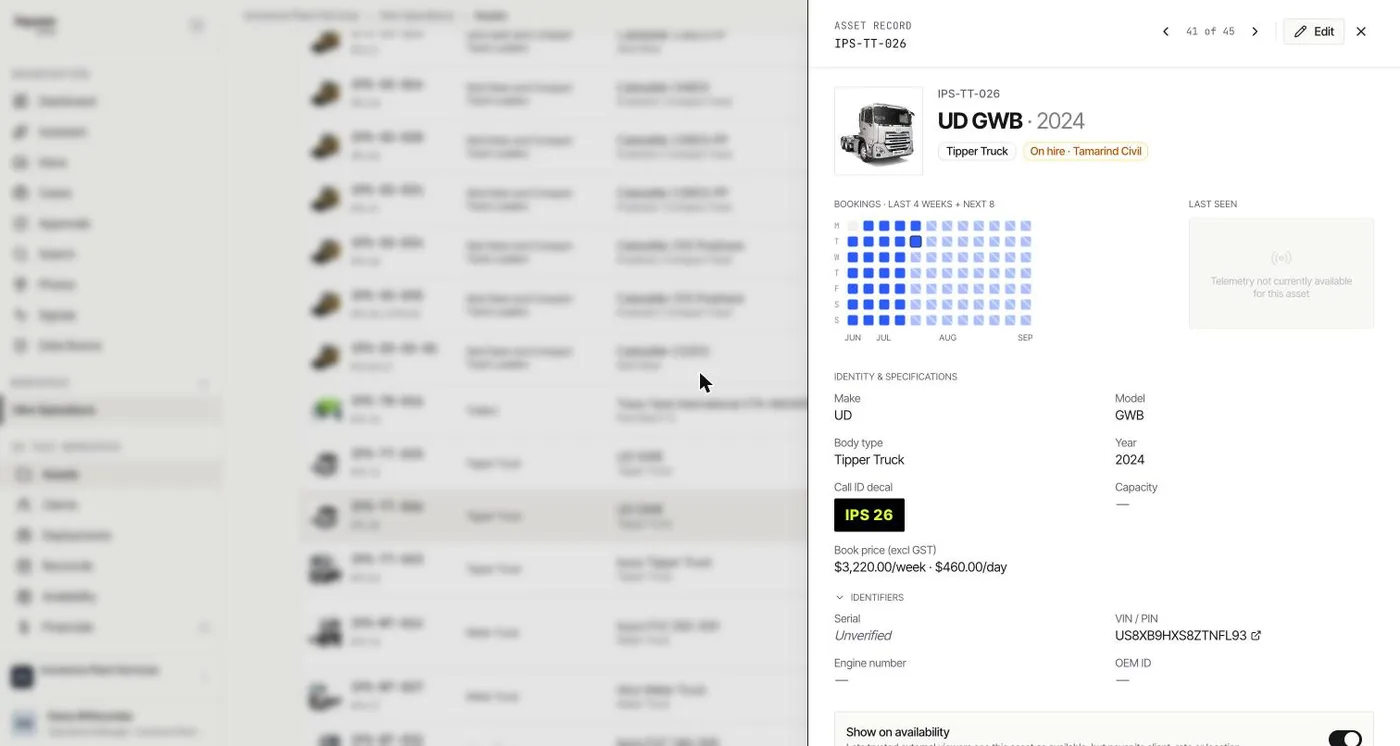
The same record for a machine with nothing fitted. Hire, rates and availability are governed either way.
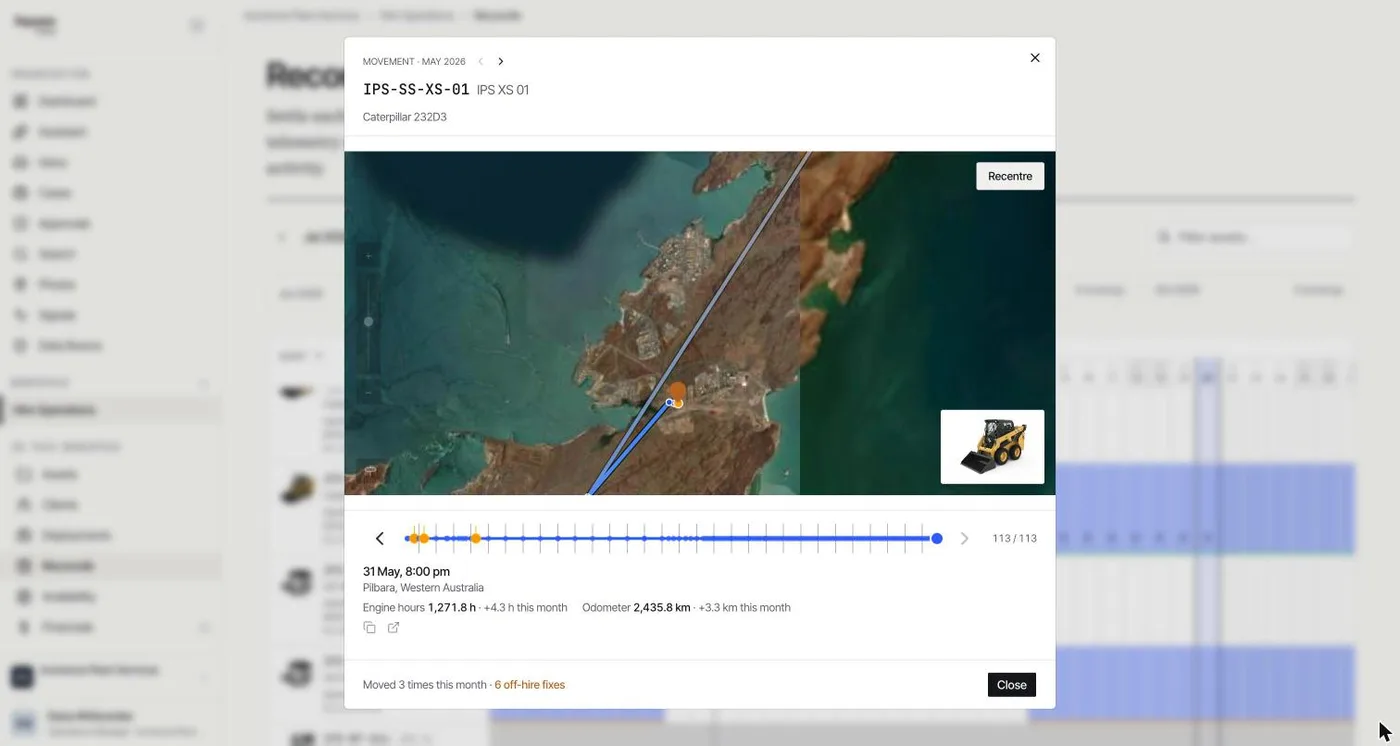
Recorded movement over a month, with the off-hire fixes that reconciliation is later argued from.
DEMONSTRATION ORGANISATION. THE DATA IS ILLUSTRATIVE. THE BEHAVIOUR IS THE REAL PRODUCT.
The objective isn’t another fleet system.
It’s to connect the information and workflows that surround your assets, then automate the movement of work between people, systems and the field. The systems that already do their job well keep doing it. What changes is that the work between them stops depending on someone remembering.
Because that information sits in a governed environment, AI can be used safely across it. Your people can ask questions, surface issues, generate reports, support decisions and start approved workflows, with the permissions, evidence and traceability your organisation needs already applied.
A reconciliation two parties can stand behind, and a record nothing rewrites.
The physical business runs on the same foundation as your documents and knowledge. Automation handles the repeatable; everything stays on the record.
Square One is tailored to the way your operation already runs, and integrates with the systems and telemetry providers you already use.
Book a walkthroughRelated guide: What is Governed Work?.